
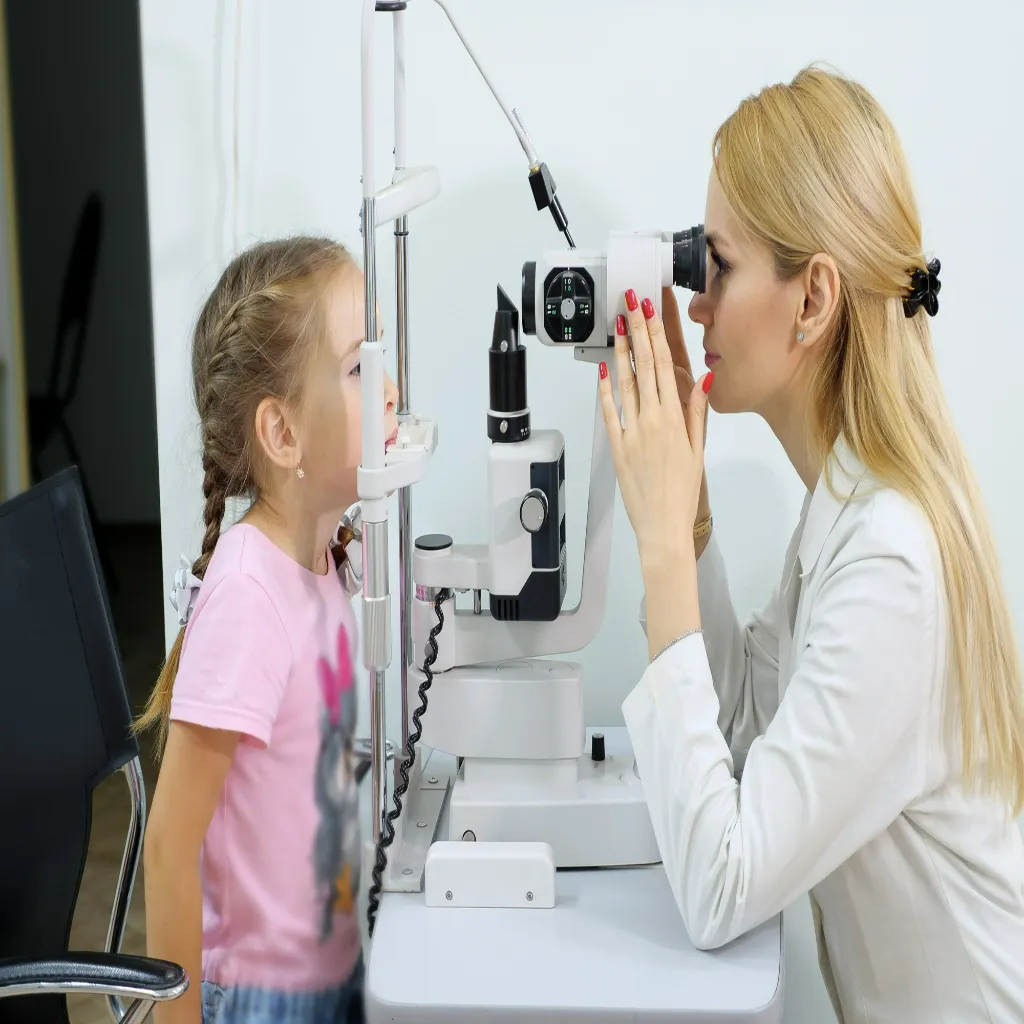
Every age and stage of life should include an eye exam to maintain healthy vision. Take care of the health of your eyes just as you would the rest of your body, and teach your kids to do the same. How well your child can see, learn, and enjoy life depends on how healthy their vision is.
To safeguard their eyes and developing vision, you can assist your child in implementing the following advice:
Eat well
Eating a healthy diet rich in fruits and vegetables can help protect your child’s vision. Fruits and vegetables have many vitamins and minerals necessary to maintain healthy eyes and vision. Remember, your kids look up to you. If you include healthy foods on your plate, you’ll be a role model they can follow.
Limit screen time
Increased screen time can make uncorrected vision problems worse. Limiting screen time each day and having your child take frequent breaks when using any type of digital device will help to protect their vision. Taking frequent breaks is also a good habit to have when doing other kinds of near-vision activities, such as reading, writing, or drawing.
Get enough sleep
As we sleep, our bodies heal and recharge. This includes our eyes. Not getting enough sleep can affect how well your child’s eyes heal from everyday eye strain and irritants in the environment—like dry air, allergens, and pollutants.
Spend time outdoors
Many children spend hours each day doing near-vision activities. Just like other muscles in the body, the muscles in the eyes need time to relax. Going outdoors allows their eyes to look at objects in the distance, which gives their eyes a chance to recover from eye strain and fatigue. Playing outdoors also helps kids be physically active, get essential vitamin D from the sun, and improve their social skills.
Wear sunglasses
Spending time outdoors has many health benefits, but you must also protect your child’s eyes from the sun. Exposure to the sun’s ultraviolet (UV) rays over time can be harmful to the eyes. For the best protection, make sure your child wears sunglasses that have 100% UV protection.
Use protective eyewear
About 90% of eye injuries can be prevented with protective eyewear. If your child is involved in sports or other activities, make sure they wear protective eyewear external icon to avoid serious eye injuries.
Get regular eye exams
When your child gets regular eye exams, their eye doctor can follow their vision at every stage of development. If anything changes, the doctor will be able to treat and manage your child’s vision quickly.
Common childhood vision issues
Your child’s performance in school may suffer if they have difficulty reading written words and letters due to vision issues. Following an eye exam and treatment, some studies have discovered improvements in learning, testing, class participation, behavior, and self-confidence.
Parents and teachers can help children by being aware of common vision problems. For example:
Refractive errors
This eye condition includes myopia (nearsightedness), hyperopia (farsightedness), and astigmatism (when the cornea or lens has a different shape than normal). Refractive errors external icon occur when light does not correctly focus on the retina, which is the light-sensitive tissue at the back of the eye. This condition causes blurred vision.
Amblyopia (lazy eye)
This eye condition occurs when vision in one eye is reduced because of a communication error between the brain and the affected eye. The brain will rely more and more on the stronger eye, while vision in the weaker eye gets worse.
Strabismus (crossed eyes)
This eye condition can affect one or both eyes. When a child has strabismus, their eyes do not focus on the same object at the same time. As a result, their eyes have trouble maintaining the correct position.
Convergence insufficiency
This eye condition affects how the eyes work together when looking at objects close up. Convergence insufficiency of the external icon can cause blurry or double vision when a person looks at any object close up, including a book, computer, or digital device.
If you notice your child squinting, rubbing their eyes, having trouble concentrating, or complaining of headaches after doing schoolwork, make an appointment with an eye doctor. The eye doctor can check your child for these conditions and other vision problems external icons and provide treatment if needed.
Vision tests and eye examinations
Your child’s eyes may quickly change as they mature. As part of routine exams, your child’s pediatrician most likely will check their vision. They might suggest that your child undergo a thorough eye exam at an eye doctor if they discover any indications of a vision issue.
Although both are important, a vision screening and an eye exam are not the same things.
A vision screening is a quick evaluation of your child’s eyes. It can be done by a family doctor, pediatrician, school nurse, or other health care professional. Although it can help identify possible vision problems your child may have, it cannot diagnose the exact problem.
A comprehensive eye exam is a thorough exam done by an eye doctor—a specialist called an ophthalmologist or optometrist. The eye doctor can diagnose your child’s medical or vision problem and provide treatment.
A vision screening should not take the place of a comprehensive eye exam. Even if your child passes a vision screening, they should also see an eye doctor at least once a year to check the overall health of their eyes.
If you have any concerns about your child’s vision, ask their pediatrician to help you find an eye doctor. Early detection and treatment are key to protecting your child’s vision.